
This edition comprehensively covers modern manufacturing techniques, offering detailed insights into processes like casting, forming, and machining, readily available as a PDF.
Overview of the 6th Edition
The 6th Edition of “Manufacturing Processes for Engineering Materials” presents a thoroughly updated and revised exploration of manufacturing methods. Available in PDF format, it reflects the latest advancements in the field, including additive manufacturing and CNC machining. This edition maintains its commitment to providing a strong foundation in both traditional and modern processes.
Students and professionals will benefit from the detailed coverage of metal casting, forming, machining, joining, powder metallurgy, and polymer processing. The text also delves into composite material manufacturing and advanced techniques. Solutions manuals and test banks are available to support learning and assessment, making this PDF a valuable resource for anyone involved in engineering and materials science.
Importance of Manufacturing Processes in Engineering
Understanding manufacturing processes is crucial for engineers, impacting product design, material selection, and production efficiency. The 6th Edition, often sought as a PDF, emphasizes this connection, demonstrating how process capabilities influence design choices.
Effective manufacturing directly affects product cost, quality, and time-to-market. This text highlights the interplay between materials, processes, and design, equipping engineers to make informed decisions. Accessing the material as a PDF allows for convenient study and reference. Mastery of these concepts, as presented in this edition, is essential for innovation and competitiveness in modern engineering.
Metal Casting Processes
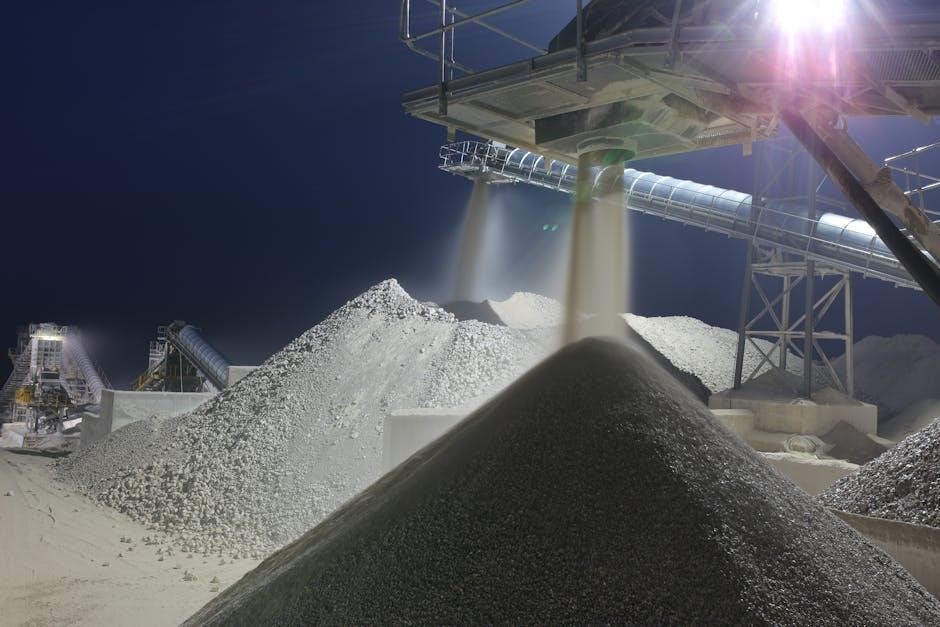
This section, detailed in the 6th Edition PDF, explores various metal casting techniques – sand, investment, die, and lost foam – for shaping metal parts.
Sand Casting: Principles and Applications
Sand casting, thoroughly explained within the Manufacturing Processes for Engineering Materials 6th Edition PDF, remains a widely used process due to its versatility and cost-effectiveness. It involves creating a mold from sand, into which molten metal is poured.
The PDF details the principles of mold making, gating systems, and riser design, crucial for controlling solidification and minimizing defects. Applications range from large engine blocks to intricate components. The text highlights advantages like accommodating complex geometries and handling various metals, alongside limitations such as surface finish and dimensional accuracy.
Students will find detailed illustrations and explanations of core boxes, sand mixtures, and pouring techniques, making it a foundational element in understanding metal forming.
Investment Casting: Precision and Complexity
Investment casting, extensively covered in the Manufacturing Processes for Engineering Materials 6th Edition PDF, is renowned for its ability to produce parts with exceptional precision and intricate details. This process utilizes a wax pattern, coated in a ceramic shell, which is then melted out, leaving a cavity for molten metal.
The PDF elucidates the steps involved, from pattern creation to shell building and metal pouring, emphasizing dimensional accuracy and smooth surface finishes. Applications include turbine blades, jewelry, and medical implants. While more expensive than sand casting, it offers superior quality and the capability to create complex geometries with minimal machining.
Detailed diagrams and explanations of slurry composition and burnout procedures are included.
Die Casting: High Volume Production
Die casting, thoroughly detailed within the Manufacturing Processes for Engineering Materials 6th Edition PDF, is a metal casting process ideal for large-scale production of components with complex shapes. Molten metal is injected under high pressure into reusable steel molds – the dies.
The PDF explains both hot-chamber and cold-chamber die casting, highlighting their respective advantages and limitations. This method excels in producing parts with tight tolerances and excellent surface finish, commonly used for automotive components, housings, and hardware. It’s cost-effective for high volumes, despite significant tooling costs.
The text includes information on die materials and process parameters.
Lost Foam Casting: Environmental Considerations
Lost foam casting, extensively covered in the Manufacturing Processes for Engineering Materials 6th Edition PDF, presents unique environmental aspects. This process utilizes polystyrene foam patterns, which vaporize upon metal contact, creating the final part.
The PDF details how the decomposition of the foam generates gases, requiring proper ventilation and filtration systems. While eliminating the need for cores and binders, polystyrene waste management is crucial. Recycling options and minimizing foam usage are discussed.
The text emphasizes the importance of responsible disposal and potential for utilizing biodegradable foam alternatives, aligning with sustainable manufacturing practices.
Metal Forming Processes
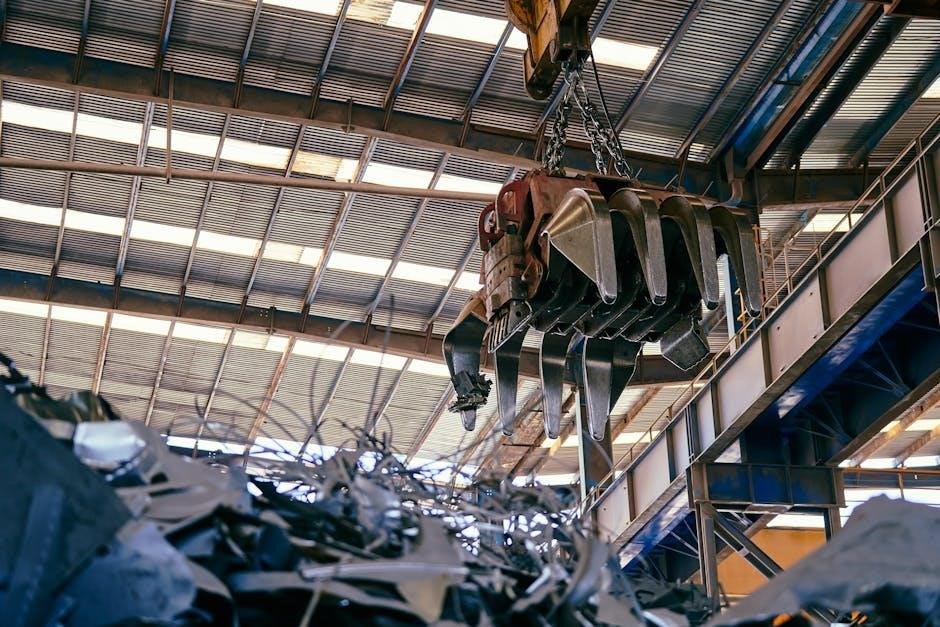
The 6th Edition PDF details shaping metals using localized plastic deformation—rolling, forging, extrusion, and drawing—altering their properties and form efficiently.
Rolling: Shaping Metals Through Compression
As detailed in the 6th Edition PDF, rolling is a fundamental metal forming process reducing thickness or changing cross-section through compressive forces. This process utilizes rotating rolls to plastically deform the metal, commonly applied to produce sheets, plates, and structural shapes.
Different rolling methods, like hot and cold rolling, impact the material’s microstructure and mechanical properties. The PDF elucidates how parameters such as roll speed, temperature, and reduction ratio influence the final product’s characteristics. Furthermore, it covers various rolling mill configurations and their specific applications in industries ranging from steel production to aluminum processing, offering a comprehensive understanding of this vital manufacturing technique.
Forging: Enhancing Strength and Ductility
The 6th Edition PDF extensively details forging, a deformation process shaping metal using localized compressive forces. This method improves material strength and ductility by refining grain structure. Various forging techniques, including hammer forging, press forging, and die forging, are thoroughly explained, highlighting their unique capabilities.
The PDF emphasizes how controlled deformation enhances mechanical properties, making forged components ideal for critical applications. It also covers aspects like die design, lubrication, and temperature control, crucial for achieving desired shapes and quality. Understanding forging, as presented in the text, is vital for engineers seeking to optimize component performance and reliability.
Extrusion: Creating Complex Profiles
The 6th Edition PDF provides a detailed examination of extrusion, a process forcing material through a die to create desired cross-sections. This method is exceptionally versatile, enabling the production of complex and consistent profiles in various materials, including metals, polymers, and ceramics.
The PDF clarifies direct and indirect extrusion techniques, outlining their advantages and limitations. It also delves into crucial parameters like die design, lubrication, and temperature control, impacting product quality and efficiency. Understanding extrusion, as detailed within the text, is essential for engineers designing and manufacturing components with intricate geometries.
Drawing: Reducing Diameter and Increasing Length
The 6th Edition PDF thoroughly explains drawing, a metal forming process reducing a material’s cross-section by pulling it through a die. This technique increases length while refining material properties, crucial for producing wires, rods, and tubes. The PDF details both sheet drawing and wire drawing, highlighting the differences in tooling and process control.
Key aspects covered include die angles, lubrication systems, and drawing speeds, all impacting final product dimensions and quality; Understanding these parameters, as presented in the PDF, is vital for engineers optimizing drawing processes for specific material requirements and desired outcomes.

Machining Processes
The 6th Edition PDF details subtractive manufacturing, covering turning, milling, drilling, and grinding – essential for shaping materials with precision and accuracy.
Turning: Generating Cylindrical Shapes
Turning, a fundamental machining process detailed within the Manufacturing Processes for Engineering Materials 6th Edition PDF, utilizes a cutting tool to remove material from a rotating workpiece. This creates cylindrical shapes with high precision. The PDF comprehensively explains single-point cutting tools, their geometries, and the mechanics of chip formation during turning operations.
Furthermore, it explores various turning operations like straight turning, taper turning, and profile turning, alongside discussions on cutting parameters – speed, feed, and depth of cut – and their impact on surface finish and tool life. The PDF also covers modern turning technologies like CNC turning centers, enhancing productivity and automation.
Milling: Creating Complex Geometries
Milling, extensively covered in the Manufacturing Processes for Engineering Materials 6th Edition PDF, employs a rotating multi-point cutting tool to remove material, generating complex shapes and features. The PDF details various milling operations – face milling, end milling, and slotting – explaining cutter geometries and their influence on machining performance.
It delves into cutting parameters, material removal rates, and surface finish considerations. The PDF also explores advanced milling techniques like high-speed machining and five-axis milling, alongside CNC milling center capabilities. Understanding these concepts, as presented in the PDF, is crucial for efficient and precise part production.
Drilling: Producing Holes with Precision
Drilling, thoroughly explained within the Manufacturing Processes for Engineering Materials 6th Edition PDF, is a fundamental machining process creating cylindrical holes. The PDF details drill bit geometries, cutting speeds, and feed rates for various materials, ensuring precision and efficiency. It covers different drilling methods – twist drilling, deep-hole drilling, and step drilling – outlining their applications.
The PDF also addresses hole quality, including surface finish and dimensional accuracy, alongside common drilling challenges like burr formation and tool wear. Mastering these concepts, as detailed in the PDF, is vital for producing accurate and reliable components.
Grinding: Achieving High Surface Finish
Grinding, extensively covered in the Manufacturing Processes for Engineering Materials 6th Edition PDF, is a crucial abrasive machining process for achieving exceptional surface finishes and tight tolerances. The PDF details various grinding wheel types, abrasive materials, and grinding techniques – surface grinding, cylindrical grinding, and tool grinding – with detailed illustrations.
It explains the impact of grinding parameters like wheel speed and feed rate on surface quality and material removal. The PDF also addresses grinding forces, thermal effects, and dressing techniques, vital for optimizing the process. Understanding these concepts, as presented in the PDF, is key to precision manufacturing.

Joining Processes
The 6th Edition PDF details welding, brazing, soldering, adhesive bonding, and mechanical fastening – essential techniques for assembling engineered components effectively.
Welding: Fusing Materials Together
As detailed in the 6th Edition PDF, welding represents a crucial joining process, permanently fusing materials through the application of heat, pressure, or both. This edition extensively covers various welding techniques, including arc welding, resistance welding, and solid-state welding, analyzing their principles, applications, and associated metallurgical considerations.
The PDF emphasizes the importance of weld quality, defect prevention, and process control. It explores the impact of welding parameters on the mechanical properties of the weld joint, alongside discussions on welding metallurgy, residual stresses, and distortion. Furthermore, the text provides insights into automated welding systems and emerging welding technologies, offering a comprehensive understanding of this vital manufacturing process.
Brazing and Soldering: Lower Temperature Joining
The 6th Edition PDF thoroughly examines brazing and soldering, distinct lower-temperature joining methods utilizing filler metals to create bonds without melting the base materials. Brazing, employing filler metals with melting points above 450°C, forms strong, ductile joints suitable for diverse applications. Soldering, conversely, utilizes fillers melting below 450°C, ideal for electrical connections and delicate assemblies.
As outlined in the PDF, this edition details filler metal selection, process control, and joint design for optimal performance. It also covers the metallurgical aspects of these processes, including diffusion mechanisms and potential joint weaknesses. The text highlights applications and advantages, offering a complete understanding of these essential joining techniques.
Adhesive Bonding: Utilizing Polymers for Assembly
The 6th Edition PDF provides an in-depth exploration of adhesive bonding, a versatile joining process employing polymers to create bonds between surfaces. This method offers advantages like distributing stress, joining dissimilar materials, and sealing against environmental factors. The PDF details various adhesive types – epoxies, acrylics, polyurethanes – and their specific properties.
According to the text, surface preparation, adhesive selection, and curing processes are crucial for achieving strong, durable bonds. The edition also covers adhesive joint design, failure modes, and testing methods. It emphasizes the growing importance of adhesives in modern manufacturing, offering a comprehensive understanding of this technology.
Mechanical Fastening: Using Screws, Bolts, and Rivets
The 6th Edition PDF thoroughly examines mechanical fastening, a fundamental joining technique utilizing screws, bolts, and rivets to create robust assemblies. The PDF details thread types, fastener materials, and torque control methods for optimal performance. It explains how these fasteners distribute loads and provide reliable connections.
As outlined in the text, the edition covers various fastener designs, including self-tapping screws and blind rivets, and their applications. It also addresses failure modes like stripping and fatigue. The PDF emphasizes the importance of proper fastener selection and installation for ensuring joint integrity and longevity in manufacturing processes.
Powder Metallurgy
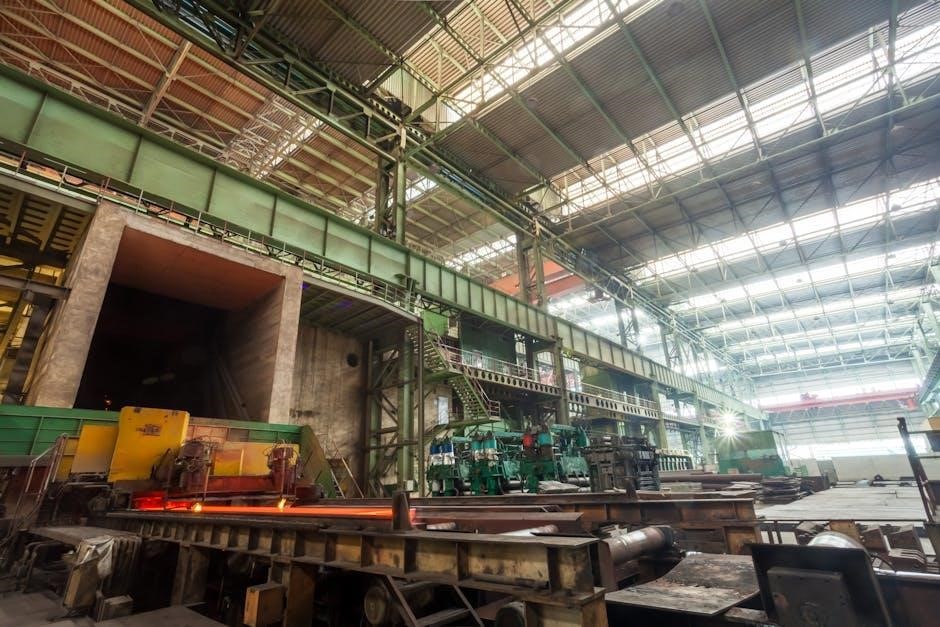
The 6th Edition PDF details powder production, compaction, and sintering—crucial for creating metal parts with unique properties and complex geometries.
Powder Production Techniques
As detailed in the 6th Edition PDF, powder metallurgy begins with creating finely divided metal powders. Several techniques are employed, including mechanical, chemical, and electrochemical methods. Mechanical methods, like milling and atomization, physically break down larger metal pieces. Atomization, a prominent process, uses high-velocity jets to shatter molten metal into droplets that solidify as powders.
Chemical methods involve reducing metal compounds, while electrochemical processes utilize electrolytic deposition. The PDF emphasizes that powder characteristics – size, shape, and composition – significantly impact the final product’s properties. Careful control of these parameters is essential for achieving desired density and strength in sintered components.
Compaction and Sintering Processes
The 6th Edition PDF thoroughly explains that after powder production, compaction forms a green body. This involves applying high pressure to the powder within a die, increasing density. Following compaction, sintering is crucial – heating the green compact to a temperature below the melting point.
This process, detailed in the PDF, facilitates bonding between powder particles, increasing strength and density. Atmosphere control during sintering is vital to prevent oxidation. The PDF highlights that sintering doesn’t fully eliminate porosity, but significantly reduces it, yielding a robust, near-net-shape component. Post-sintering operations may include machining or heat treatment.
Applications of Powder Metallurgy
As detailed in the 6th Edition PDF, Powder Metallurgy (PM) excels in producing complex shapes with controlled porosity. This makes it ideal for self-lubricating bearings and filters. The PDF emphasizes PM’s efficiency in mass production of small, intricate parts, like gears and connecting rods, minimizing material waste.
Furthermore, the PDF showcases PM’s use in creating cemented carbides for cutting tools, leveraging tungsten carbide’s hardness. It’s also prominent in manufacturing magnetic materials and electrical contacts. The PDF notes PM’s growing role in additive manufacturing, forming a base for 3D printing of metals.
Polymer Processing
The 6th Edition PDF details techniques like injection molding, extrusion, and thermoforming, crucial for shaping polymers into diverse products efficiently and economically.
Injection Molding: Mass Production of Plastic Parts
Injection molding, extensively covered in the Manufacturing Processes for Engineering Materials 6th Edition PDF, stands as a dominant method for high-volume plastic part production. This process involves injecting molten polymer material into a mold cavity, where it cools and solidifies, replicating the mold’s shape.
The PDF details crucial aspects like mold design, material selection (thermoplastics, thermosets), and process parameters – injection pressure, temperature, and cycle time – impacting part quality. It also explores variations like overmolding and insert molding. This technique’s efficiency and ability to create complex geometries make it ideal for diverse applications, from automotive components to consumer goods, as thoroughly explained within the resource.
Extrusion: Creating Plastic Profiles
Plastic extrusion, a core topic within the Manufacturing Processes for Engineering Materials 6th Edition PDF, is a continuous process used to create products with a fixed cross-sectional profile. Molten plastic is forced through a die, shaping it into the desired form – pipes, tubes, films, and custom profiles.
The PDF elaborates on the mechanics of extruders (single-screw, twin-screw), die design considerations, and the influence of process parameters like temperature and screw speed. It details various plastic materials suitable for extrusion and explores applications ranging from construction materials to packaging, providing a comprehensive understanding of this versatile manufacturing technique.
Blow Molding: Producing Hollow Plastic Products
Blow molding, thoroughly detailed in the Manufacturing Processes for Engineering Materials 6th Edition PDF, is a process for creating hollow plastic parts. It involves inflating a molten plastic tube (parison) inside a mold cavity using compressed air. This technique is ideal for producing bottles, containers, and other hollow forms.
The PDF explains different blow molding methods – extrusion blow molding, injection blow molding, and stretch blow molding – outlining their advantages and disadvantages. It covers material selection, mold design, and process control parameters, offering a complete overview of this essential polymer processing technique and its industrial applications.
Thermoforming: Shaping Plastic Sheets
Thermoforming, extensively covered within the Manufacturing Processes for Engineering Materials 6th Edition PDF, is a versatile process for shaping plastic sheets. It involves heating a plastic sheet until pliable, then forming it to a desired shape using a mold and vacuum or pressure. This method is commonly used for packaging, trays, and automotive components.
The PDF details various thermoforming techniques – vacuum forming, pressure forming, and stretch forming – explaining their specific applications and limitations. It also explores material considerations, mold design, and process optimization, providing a comprehensive understanding of this cost-effective plastic shaping method.

Composite Material Manufacturing
The 6th Edition PDF details composite fabrication, including lay-up, resin transfer molding, and pultrusion, crucial for creating strong, lightweight materials.
Lay-up Processes: Hand Lay-up and Automated Fiber Placement
The 6th Edition’s PDF thoroughly examines lay-up techniques, beginning with the traditional hand lay-up process, detailing resin application and fiber orientation for customized composite structures. It then transitions to Automated Fiber Placement (AFP), highlighting its precision and efficiency in creating complex geometries.
This section explores the advantages of AFP, including reduced material waste and improved laminate quality, alongside comparisons to hand lay-up regarding production rates and labor costs. The PDF also covers various fiber types, resin systems, and tooling considerations relevant to both methods, providing a comprehensive understanding of composite fabrication fundamentals.
Resin Transfer Molding: Impregnating Fibers with Resin
The 6th Edition’s PDF provides an in-depth analysis of Resin Transfer Molding (RTM), a closed-mold process ideal for high-volume composite production. It details how dry fiber preforms are meticulously impregnated with resin under pressure, resulting in parts with excellent surface finish and dimensional accuracy.
The PDF explores various RTM techniques, including vacuum-assisted RTM and light RTM, discussing their respective advantages and applications. It also covers resin selection, preform design, and process control parameters crucial for achieving optimal composite properties, offering a complete overview of this vital manufacturing method.
Pultrusion: Continuous Production of Composite Profiles
The 6th Edition’s PDF thoroughly examines Pultrusion, a highly efficient process for manufacturing continuous composite profiles with constant cross-sections. It details how reinforcing fibers are pulled through a resin bath and then shaped and cured within a heated die.
The PDF explains the key components of a pultrusion system, including fiber creels, resin impregnation systems, and the die assembly. It also covers material selection, process parameters, and quality control aspects, providing a comprehensive understanding of this cost-effective method for producing structural components like beams, rods, and tubes.

Advanced Manufacturing Processes
The 6th Edition PDF details cutting-edge techniques like 3D printing, CNC machining, and laser processing, revolutionizing material fabrication and design possibilities.
Additive Manufacturing (3D Printing): Layer-by-Layer Fabrication
The 6th Edition’s PDF extensively explores additive manufacturing, detailing how materials are built layer-by-layer from digital designs. This section covers various 3D printing technologies, including stereolithography, selective laser sintering, and fused deposition modeling.
It analyzes the advantages of this process – design freedom, rapid prototyping, and customized production – alongside limitations like material choices and build rates. Kalpakjian and Schmid’s work emphasizes the growing role of 3D printing in diverse industries, from aerospace to biomedicine, and its impact on traditional manufacturing paradigms. The PDF provides a thorough understanding of this transformative technology.
CNC Machining: Computer-Controlled Precision
The 6th Edition’s PDF delivers an in-depth examination of Computer Numerical Control (CNC) machining, a cornerstone of modern manufacturing. It details how computer programs dictate tool paths, ensuring high precision and repeatability;
This section covers various CNC machine types – mills, lathes, and routers – and their applications. Kalpakjian and Schmid explain the principles of G-code programming and the importance of tooling selection. The PDF highlights the benefits of CNC machining, including increased efficiency and complex geometry creation, alongside considerations for setup and maintenance. It’s a vital component of the comprehensive material.
Laser Cutting and Welding: High-Energy Beam Processing
The 6th Edition PDF thoroughly explores laser-based manufacturing, detailing both cutting and welding applications. It explains how focused laser beams melt, vaporize, or ablate material, creating precise cuts and strong welds.
Kalpakjian and Schmid discuss different laser types – CO2, Nd:YAG, and fiber lasers – and their specific advantages. The PDF covers process parameters like power density, cutting speed, and shielding gas. It also addresses safety considerations and the growing use of laser technology in diverse industries, from aerospace to medical device manufacturing, offering a detailed overview.

Solutions Manual and Test Banks
The 6th Edition PDF is often accompanied by a solutions manual and test banks, aiding instructors and students with problem-solving and assessment.
Availability of Solutions Manual for 6th Edition
Finding the solutions manual for Manufacturing Processes for Engineering Materials, 6th Edition, can be challenging but is often available through various online platforms. Several websites, like Issuu and downloadlink.org, advertise access to the manual, frequently linked to the ISBN 9780134290553.
However, exercise caution when downloading from such sources, ensuring they are legitimate to avoid potential security risks. Course Hero also lists the book, potentially offering related resources. The PDF version of the manual is often sought after by both students and instructors to verify solutions and deepen understanding of the complex concepts presented in the textbook.
Utilizing Test Banks for Assessment
Test banks accompanying Manufacturing Processes for Engineering Materials, 6th Edition, are valuable tools for evaluating student comprehension. These resources, often available alongside the PDF textbook, contain a wide range of questions – multiple choice, true/false, and problem-solving – mirroring the textbook’s content.
Instructors can use them to create quizzes, exams, and homework assignments, ensuring thorough assessment of key concepts. Strategic Management resources also list the test bank alongside the eBook. Utilizing a test bank helps gauge student understanding of complex manufacturing processes and identify areas needing further clarification, ultimately enhancing the learning experience.